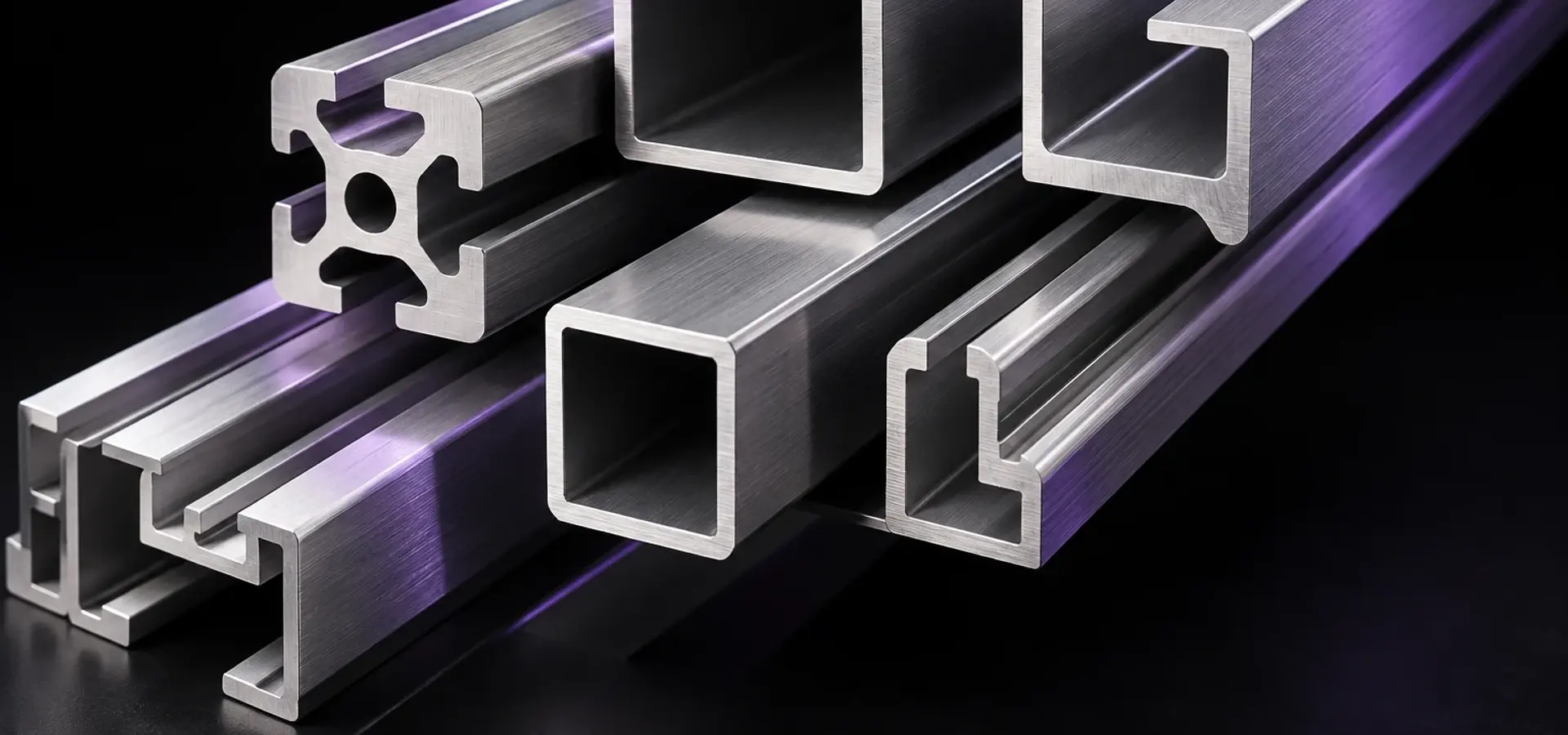
Aluminium in automotive manufacturing
Battery enclosures, crash structures, roof rails and seat frames — why vehicle makers specify extruded aluminium, and what the drawing has to settle before a quote means anything.
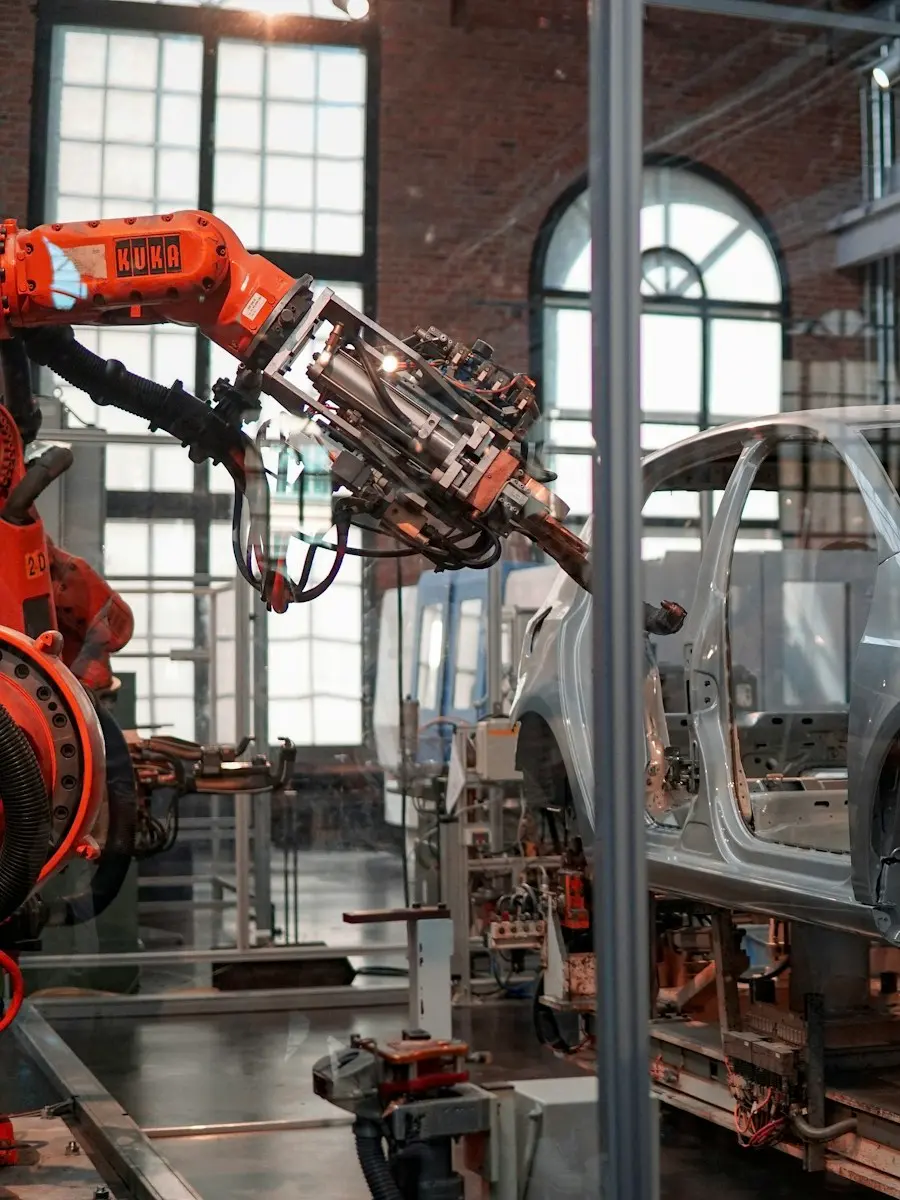
Electrification changed what a car body is made of. A battery pack is heavy, so every kilogram taken out of the structure around it is range put back in — and extruded aluminium is the cheapest place to find that weight.
The sections are doing structural work: enclosing cells, absorbing a crash, carrying a roof load. This is not trim, and the specification reflects that.
Automotive at a glance
- Governs the choice
- Mass, and energy absorbed per kilogram in a controlled crush
- Usual alloys
- 6005A, 6061 and 6082, normally in T6 where the member is structural
- After extrusion
- Bending, hydroforming, machining, friction stir or MIG welding
- Commercial shape
- Series volumes, with the die cost set against an annual call-off
Why aluminium suits automotive
Weight is the whole argument
Aluminium is roughly a third the density of steel. In an EV that translates directly into range, and in any vehicle into braking, handling and tyre wear.
It absorbs a crash predictably
A multi-void extrusion folds in a controlled, repeatable way under axial load, which is exactly what a crash management system is asked to do. The energy absorbed per kilogram is why crash rails are extruded rather than pressed.
It recycles without losing much
Remelting aluminium takes a small fraction of the energy of primary production, and the metal does not meaningfully degrade. For a manufacturer counting embodied carbon, that matters as much as the mass saved.
Aluminium sections used in automotive
Extruded parts this sector asks for, and the families each one is drawn from.
- Battery enclosure frames and trays
- Crash management systems and bumper beams
- Sill and rocker reinforcements
- Roof rails and cross members
- Seat frames and slide rails
- Heat exchanger and cooling plate sections
- Interior and exterior trim profiles
- Commercial body and trailer framing
What a quote actually depends on
Four answers turn an enquiry into a price. The rest can be worked back from the duty.
- Alloy
- 6005A, 6061 and 6082 where strength governs. Crash-relevant members are usually specified with the alloy and temper fixed by the customer's own test programme.
- Temper
- T6 for structural members. Where a section has to be bent or hydroformed after extrusion, a softer temper and a subsequent age is the usual route.
- Tolerance
- Automotive assemblies stack tolerances across several parts, so the drawing usually carries tighter limits than a general engineering section and states which datum they are taken from.
- Volume
- Tell us the annual quantity and the call-off pattern. A die is a fixed cost — how it is amortised is a different conversation at 500 pieces than at 50,000.
Where these sections go wrong
The bend radius chooses the wall
A section detailed purely for stiffness can split on a mandrel bend at T6. Say what is being bent and to what radius early — corner radii, wall thickness and void layout all get designed around it.
A weld softens what it joins
The heat-affected zone of a fusion weld drops a T6 member back toward its annealed strength. Move the joint off the loaded section, use a bolted or friction stir route, or design for the reduced value.
Tolerances stack across the assembly
Name the datum the limits are taken from. Where every part is quoted to the tightest dimension on its own drawing, the assembly still will not close and the whole set costs more.
Questions this work raises
What buyers specifying automotive sections ask before they send a drawing.
6005A, 6061 and 6082 in T6 cover most enclosure frames, trays and cross members: enough strength for the crush case, good extrudability into multi-void sections, and weldable. Crash-relevant members usually arrive with the alloy and temper already fixed by the customer's own test programme.
Yes — stretch bending, rotary draw bending and hydroforming are all normal downstream operations. A T6 section is less forgiving than a softer temper, so say what will be bent and to what radius before the die is cut; corner radii, wall thickness and void layout are designed around the bend.
Three things: the die, the alloy and temper, and the annual volume it is amortised over. A die is a one-time fixed cost set by size, complexity and whether the section is solid or hollow. Send the drawing, the yearly quantity and the call-off pattern and the cost per metre follows from those.

Let’s build the right solution for you
Send a drawing, a sample or just the application. We design the die and extrude the profile around it.
Common questions
Yes — that is what the plant was built for. Send a cross-section, a sketch or a sample and we design the die around your application.
The application, the section and the quantity. If you already have a drawing, send the dimensions with it.
Yes. Angles, channels, flat bars, tubes and T-sections, alongside architectural and window sections.
Send a sample or a cross-section of the existing part. Matching an established profile is a die design job like any other.
Access equipment — aluminium ladders, scaffolding and FRP ladders.
Send us your requirement
Name, number and what you need. That is enough to come back to you with something useful.