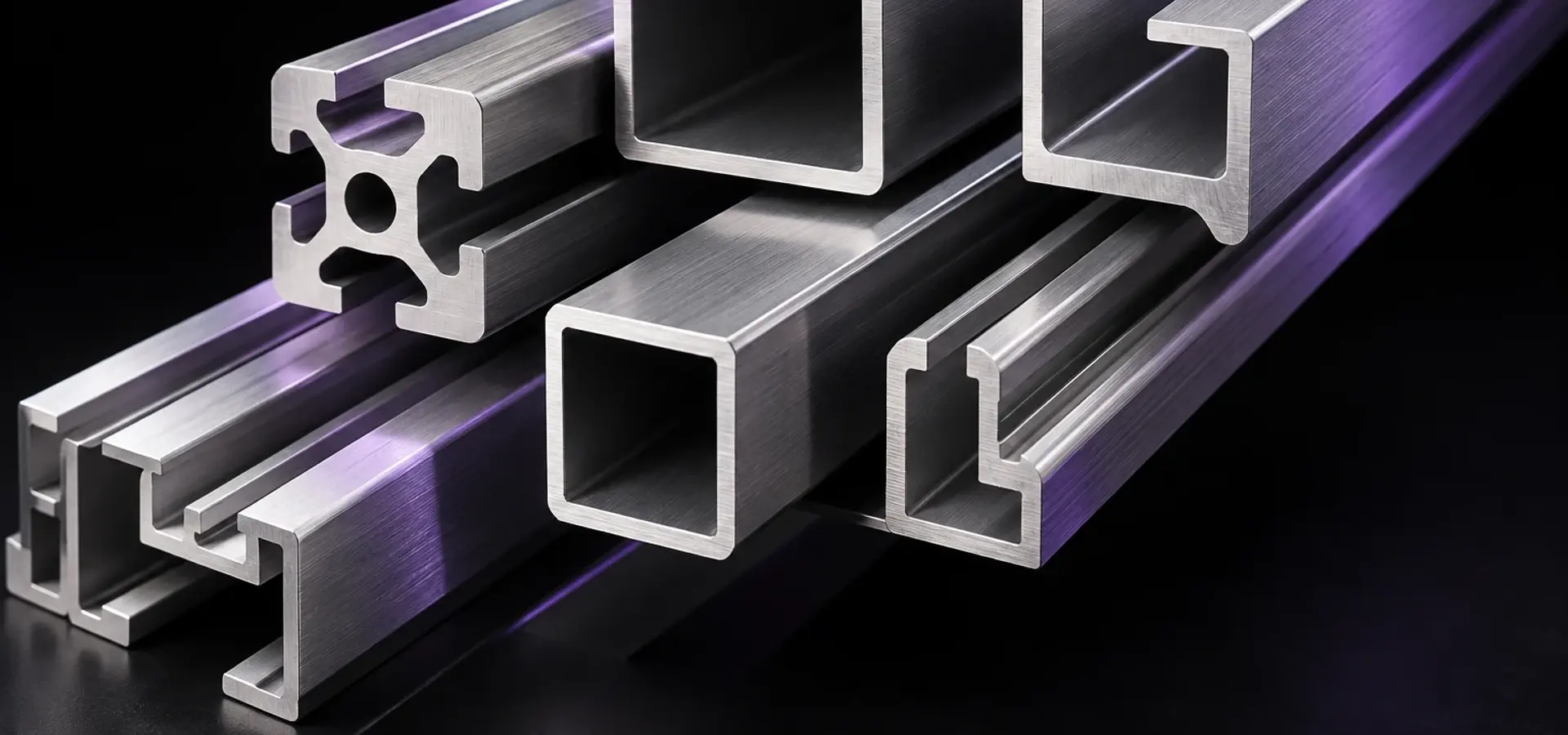
Aluminium in industrial and machine building
T-slot machine frames, conveyors, guarding and workstations — the modular system that lets a production line be reconfigured without a fabrication shop.
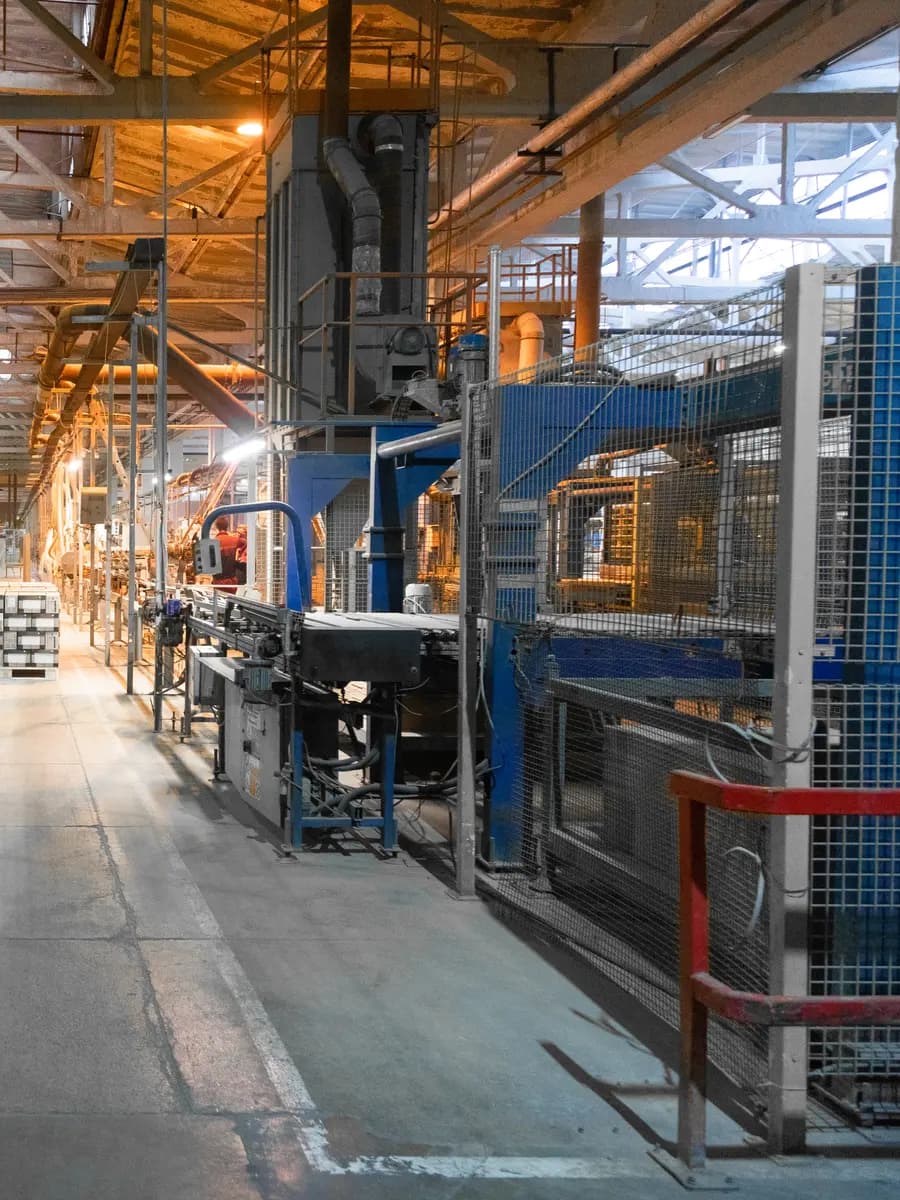
T-slot aluminium framing turned machine building into an assembly job. A frame that would once have been welded from steel box and then painted is now bolted together from profile, and it can be taken apart again when the line changes.
That reconfigurability is the point. A production line that is modified twice a year is cheaper in aluminium even where steel would have been cheaper on day one.
Industrial Applications at a glance
- Governs the choice
- Modularity — a bolted frame that can be lengthened, re-squared or reused
- Usual alloys
- 6063 for general framing; 6082 where a member spans and carries
- Usual finish
- Mill; anodised where the frame is handled constantly or wiped down
- Design input
- Slot series and fastener standard, cut lengths, end condition
Why aluminium suits industrial applications
It comes apart again
A bolted T-slot frame can be lengthened, re-squared or repurposed. A welded steel frame is a fixed asset that gets scrapped when the product changes.
No coating to maintain
Mill or anodised aluminium needs no paint, so there is nothing to chip in a working environment and nothing to touch up. In food and pharmaceutical areas that also means nothing to flake.
One person can handle it
Profile arrives in lengths a fitter can carry and cut on a mitre saw. Building a guard or a workstation does not need a fabrication shop.
Aluminium sections used in industrial applications
Extruded parts this sector asks for, and the families each one is drawn from.
- T-slot machine frames and bases
- Conveyor structures and side rails
- Machine guarding and safety fencing
- Assembly workstations and benches
- Robot cells and enclosures
- Linear motion and actuator profiles
- Test rigs, jigs and fixtures
- Material handling trolleys and racks
Sections this work draws on
See the full rangeWhat a quote actually depends on
Four answers turn an enquiry into a price. The rest can be worked back from the duty.
- Alloy
- 6063 for general framing; 6082 where a member spans and carries. If the frame is structural rather than an enclosure, say so — it changes the section, not just the alloy.
- Slot standard
- T-slot systems are only modular if the slot matches the fasteners and brackets you already own. State the series you are working to, or send a sample.
- Length and cut
- Cut-to-length with a square, deburred end saves a saw operation at your side and is usually the cheaper way to buy framing.
- Finish
- Mill finish is standard and adequate indoors. Anodise where the frame is handled constantly or has to be wiped down.
Where these sections go wrong
Slot series do not interchange
An 8 mm slot on one maker's 40 mm profile is not the same slot as another's. State the series you already own, or send a length — brackets, T-nuts and end fasteners do not transfer between systems.
Deflection decides the section, not strength
A machine frame is almost never loaded to yield; it fails on how much it moves under load. Give the span and the deflection you can accept, and the profile follows from that.
A guard answers to the standard
Mesh aperture and the distance from the hazard are set by the safety standard, and the frame is designed around that. Sizing the opening by eye is what gets a cell rejected at sign-off.
Questions this work raises
What buyers specifying industrial applications sections ask before they send a drawing.
Not reliably. An 8 mm slot on one maker's 40 mm profile is not dimensionally the same slot as another's, and brackets, T-nuts and end fasteners do not transfer. State the series you already own, or send a short length as a sample, before anything is quoted.
6063 for general framing and enclosure work, 6082 where a member spans and carries. A machine frame usually fails on deflection rather than strength, so give the span and the movement you can accept — that decides the section more than the alloy does.
Yes, and on framing it is usually the cheaper way to buy: a square, deburred, cut-to-length end saves a saw operation and the offcut. On a job with many identical short pieces the saving is larger than the cutting charge.

Let’s build the right solution for you
Send a drawing, a sample or just the application. We design the die and extrude the profile around it.
Common questions
Yes — that is what the plant was built for. Send a cross-section, a sketch or a sample and we design the die around your application.
The application, the section and the quantity. If you already have a drawing, send the dimensions with it.
Yes. Angles, channels, flat bars, tubes and T-sections, alongside architectural and window sections.
Send a sample or a cross-section of the existing part. Matching an established profile is a die design job like any other.
Access equipment — aluminium ladders, scaffolding and FRP ladders.
Send us your requirement
Name, number and what you need. That is enough to come back to you with something useful.