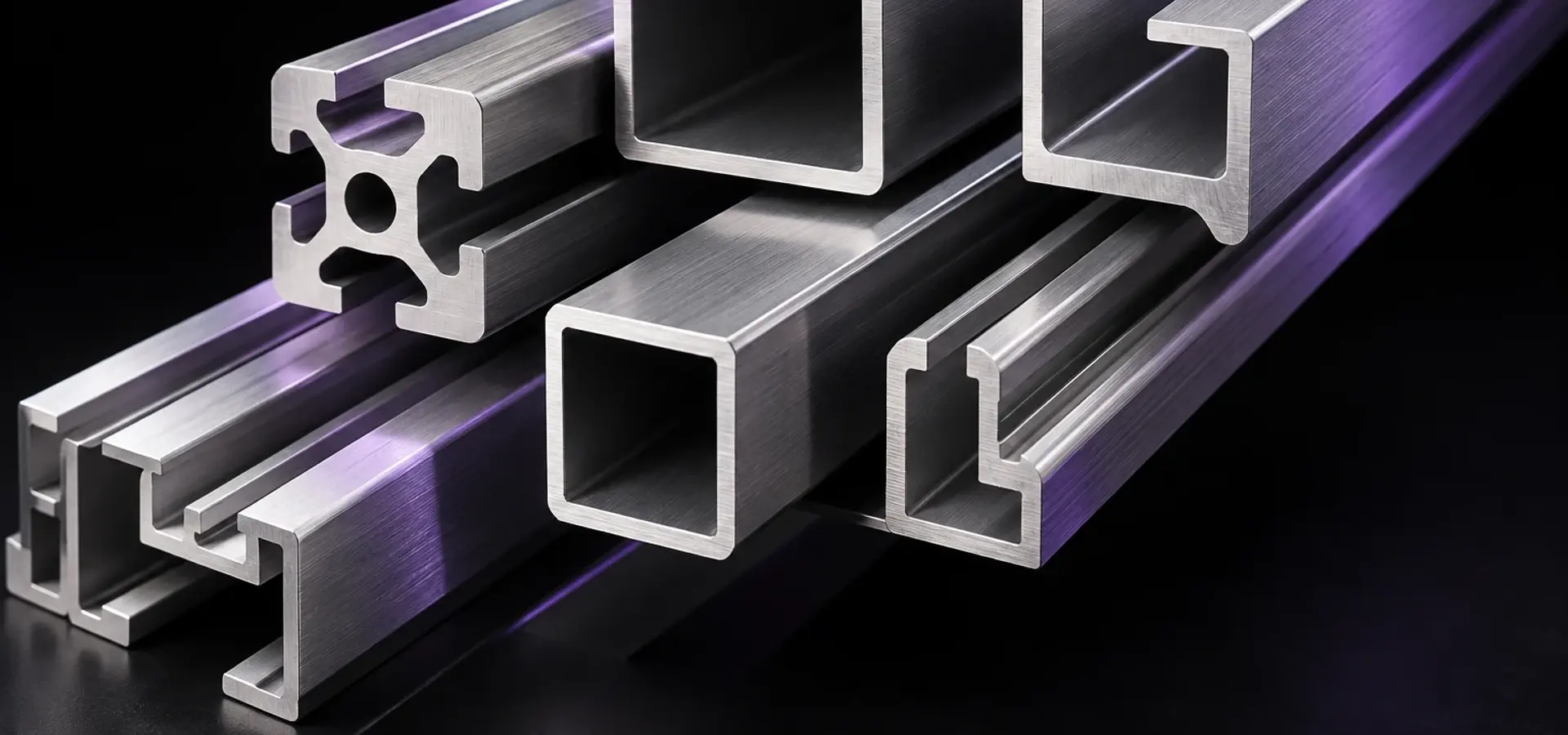
Aluminium for engineering and fabrication
Angles, channels, flats, tubes and T-sections in stock lengths — machinable, weldable, and available without a die programme behind them.
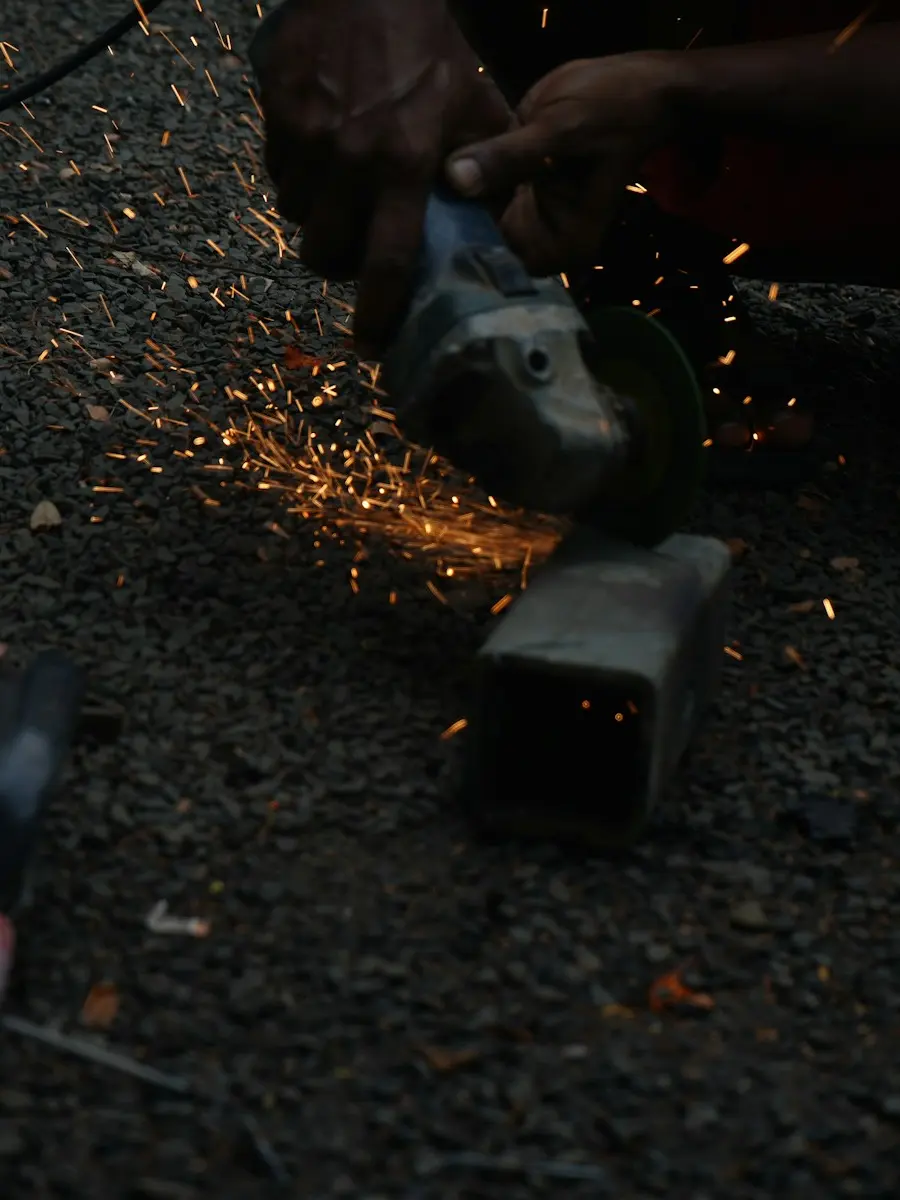
Not every job justifies a die. A workshop building a jig, a bracket, a one-off frame or a repair needs standard sections in standard lengths, today, in a size close enough to work from.
That is what the standard range is for: angle, channel, flat, round and square tube and T-section, in the dimensions the trade actually asks for.
Engineering & Fabrication at a glance
- Governs the choice
- Availability, and how easily the shop can cut, weld and machine it
- Usual alloys
- 6063 for general work; 6061 or 6082 where the part is loaded
- Usual finish
- Mill; anodised where the part is handled or ends up on show
- How it is bought
- Stock lengths or cut to size, from one length to a container
Why aluminium suits engineering & fabrication
It machines cleanly
Aluminium cuts fast, drills and taps without special tooling, and does not work-harden the way stainless does. A general workshop can process it with what it already owns.
It welds
The 6xxx series welds with MIG or TIG, allowing for the strength reduction in the heat-affected zone. Designing the joint away from the loaded section is the normal way around that.
No tooling, no lead time
A standard section needs no die, so the only question is availability. Custom geometry is available too — it is simply a different conversation with a different lead time.
Aluminium sections used in engineering & fabrication
Extruded parts this sector asks for, and the families each one is drawn from.
- Jigs, fixtures and inspection frames
- Brackets, mounts and sub-assemblies
- One-off and small-batch fabrication
- Prototype and development builds
- Repair and replacement sections
- Trailer, body and enclosure framing
- Guarding and platform structures
- Marine and transport fit-out
What a quote actually depends on
Four answers turn an enquiry into a price. The rest can be worked back from the duty.
- Alloy
- 6063 for general work and better finish; 6061 or 6082 where the part is loaded. If it will be welded, say so — it affects both the alloy choice and the joint design.
- Size
- Give leg length, wall thickness and the overall dimension. A 50x50x3 angle and a 50x50x6 are different parts with different prices, and the wall is the one people leave off.
- Length
- Stock lengths, or cut to size. On a job with many short pieces, cutting to your dimensions is usually cheaper than buying the offcut.
- Quantity
- One length and a container are both fine. Saying which lets us quote the right way round rather than pricing a trial as if it were a production order.
Where these sections go wrong
The wall is the dimension people leave off
A 50 × 50 × 3 angle and a 50 × 50 × 6 are different parts at different prices. Leg, wall and overall — all three, every time, or the quote is a guess.
A weld gives back much of the strength
The heat-affected zone in the 6xxx series drops toward the annealed condition for an inch either side of the bead. Put the joint away from the loaded section, or design to the softened value.
It is not a soft steel
Aluminium moves as it is machined out of one face, expands about twice as far with temperature, and strips a thread far sooner. Threaded holes in thin wall want an insert, not a deeper tap.
Questions this work raises
What buyers specifying engineering & fabrication sections ask before they send a drawing.
No. Angle, channel, flat, round and square tube and T-section are standard geometry, so the only question is size and availability. A die is needed when the cross-section does not already exist — that is a different conversation with a different lead time, not a refusal.
The 6xxx series welds with MIG or TIG. The heat-affected zone either side of the bead loses much of a T6 temper and drops toward the annealed condition, so the normal approach is to place the joint away from the loaded part of the section, or design to the softened strength.
The three dimensions and the quantity. Leg or overall size, wall thickness and length — the wall is the one that gets left off, and a 50 × 50 × 3 angle is a different part at a different price from a 50 × 50 × 6. One length or a container are both fine; saying which gets the quote priced the right way round.


Let’s build the right solution for you
Send a drawing, a sample or just the application. We design the die and extrude the profile around it.
Common questions
Yes — that is what the plant was built for. Send a cross-section, a sketch or a sample and we design the die around your application.
The application, the section and the quantity. If you already have a drawing, send the dimensions with it.
Yes. Angles, channels, flat bars, tubes and T-sections, alongside architectural and window sections.
Send a sample or a cross-section of the existing part. Matching an established profile is a die design job like any other.
Access equipment — aluminium ladders, scaffolding and FRP ladders.
Send us your requirement
Name, number and what you need. That is enough to come back to you with something useful.