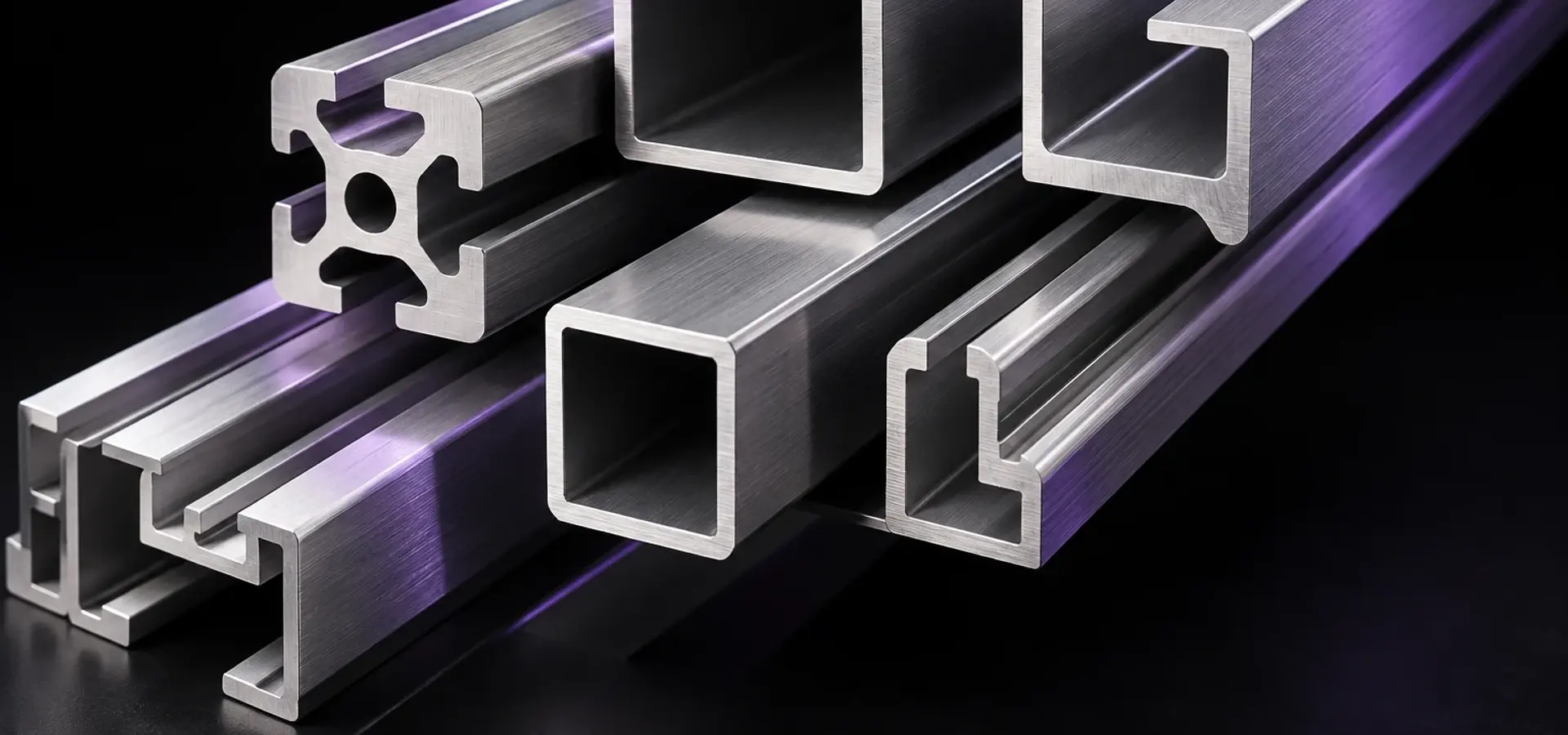
Custom profiles, designed around the application
A profile drawn around the application — what to send, how die design actually works, and what decides feasibility, lead time and cost.
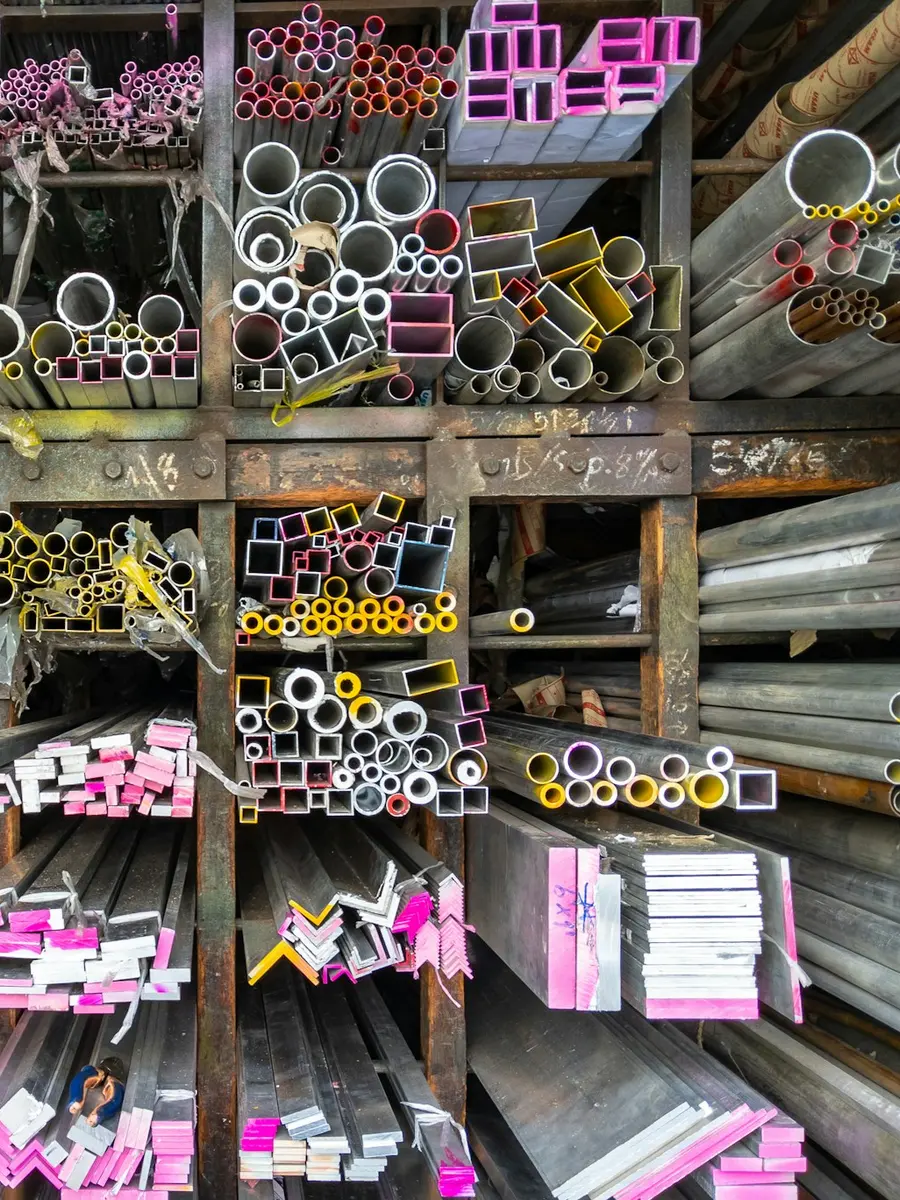
The most useful section is often the one that does not exist yet — the profile that replaces four fabricated parts and their assembly, or that finally gets a tolerance to close.
That is where extrusion earns its keep. A die is a fixed cost, and once it exists, the geometry it produces is free every time it runs.
Customised Applications at a glance
- Starting point
- A dimensioned cross-section, a sketch, a photograph of the mating part, or a sample
- What bounds it
- Circumscribing circle, wall thickness, symmetry and the depth of any narrow slot
- Tooling
- One die per profile — a single fixed cost, then free geometry every run
- Design input
- The two or three dimensions that genuinely govern fit, and the annual volume
Why aluminium suits customised applications
One part instead of four
Features that would be separate components — a hinge knuckle, a screw port, a gasket race, a slot — can be designed into one section. Every one absorbed is an assembly operation and a tolerance stack removed.
The tooling pays back
A die is the only real up-front cost. Set against parts eliminated, labour removed and scrap avoided, it usually pays back well inside the first production run.
You keep the geometry
A profile designed for your product is yours to specify. Nobody else's catalogue decides whether it stays available.
Aluminium sections used in customised applications
Extruded parts this sector asks for, and the families each one is drawn from.
- Profiles replacing multi-part fabrications
- Sections with integral screw ports and slots
- Gasket and seal carrier geometry
- Interlocking and snap-fit sections
- Multi-void hollow structural profiles
- Thermally broken composite sections
- Sections matched to existing components
- Replacements for discontinued profiles
Sections this work draws on
See the full rangeWhat a quote actually depends on
Four answers turn an enquiry into a price. The rest can be worked back from the duty.
- Send a drawing
- A dimensioned cross-section is ideal, but a sketch with the critical dimensions, a photograph of the part it has to mate with, or a sample will all start the conversation.
- Say what is critical
- Every dimension cannot be critical. Marking the two or three that actually govern fit lets the rest carry standard tolerance, which is what keeps the part affordable.
- Alloy, temper, finish
- If you know them, send them. If you do not, describe the duty — indoor or outdoor, loaded or not, visible or hidden — and the specification can be worked back from that.
- Quantity and timing
- Annual volume and when you need first parts. Both feed the die decision, and both change the answer on cost per metre.
Where these sections go wrong
Even walls extrude straight
A 2 mm wall running into an 8 mm boss cools at two rates and the section twists as it comes off the press. Even walls, generous radii and no unsupported thin tongue is most of a good extrusion drawing.
Not every dimension can be critical
Mark the two or three that govern fit and let the rest carry standard tolerance. Pricing a section to the tightest call-out on the drawing is how a simple profile becomes an expensive one.
A closed void is often the easier part
A deep, narrow open slot has a long thin leg that springs, and holding it costs money. Where the application allows the geometry to close, the hollow is usually the more stable and cheaper section.
Questions this work raises
What buyers specifying customised applications sections ask before they send a drawing.
A dimensioned cross-section is ideal, but a sketch with the critical dimensions, a photograph of the part it has to mate with, or a physical sample will all start it. Add the alloy and finish if you know them, the annual volume, and when you need first parts.
A die is a single fixed cost, quoted against the drawing — size, complexity and whether the section is solid or hollow drive it. Once it exists the geometry is free on every run, which is why the tooling usually pays back against the parts, assembly labour and scrap it removes inside the first production run.
It depends on the alloy, the size of the circle the section fits inside, and whether it is solid or hollow. As a rule of thumb a small solid 6063 section can go near a millimetre, while hollows and larger profiles need more. Even walls matter more than thin ones: a 2 mm wall running into an 8 mm boss cools at two rates and the section twists.


Let’s build the right solution for you
Send a drawing, a sample or just the application. We design the die and extrude the profile around it.
Common questions
Yes — that is what the plant was built for. Send a cross-section, a sketch or a sample and we design the die around your application.
The application, the section and the quantity. If you already have a drawing, send the dimensions with it.
Yes. Angles, channels, flat bars, tubes and T-sections, alongside architectural and window sections.
Send a sample or a cross-section of the existing part. Matching an established profile is a die design job like any other.
Access equipment — aluminium ladders, scaffolding and FRP ladders.
Send us your requirement
Name, number and what you need. That is enough to come back to you with something useful.